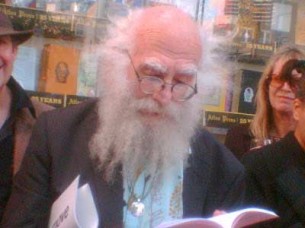
Viktor Wynd (London, 1976) is one of those characters who seem to embody the spirit of pataphysics without ever needing to define it. An artist and avant-garde impresario, Wynd proclaims himself a “pataphysician”—writer, curator, collector, amateur, naturalist, and antiquarian. As a member of the renowned London Pataphysical Institute, he has made headlines with his eccentric and provocative initiatives. In 2003, he founded The Last Tuesday Society in London—a lively artistic-literary circle (in which he humorously bears the title of Chancellor) created to “overturn life, the universe, and everything” through extravagant events. Wynd has organized over 500 literary salons and artistic events that defy convention: infamous themed parties such as Loss: an Evening of Exquisite Misery (2006), where guests—dressed in “Beauty in Decadence”—were encouraged to slice onions and weep together in a cathartic collective ritual. Shortly afterward, he reinvented the masquerade ball with monumental parties: at one event, Wynd appeared head-to-toe in sequins, entirely painted in red, while conducting a classical orchestra of a hundred musicians, as nude, gold-painted youths served live oysters to an enraptured audience. These extravagant displays have solidified his reputation as the dandy of the bizarre and set the stage for his most iconic undertaking: a museum of curiosities that is an artful work in itself.

A Museum as a Total Work of Art
In the heart of London’s East End, at 11 Mare Street (Hackney), Viktor Wynd realized a unique project: The Viktor Wynd Museum of Curiosities, Fine Art & Natural History, presented to the public through The Last Tuesday Society. Officially inaugurated on Halloween night in 2014—thanks to a successful crowdfunding campaign—this museum is Wynd’s masterpiece, conceived as a sort of Gesamtkunstwerk (a total work of art) that delves into “the depths of his mind, his most intimate thoughts, dreams, and demons”. Originally born as a “fake curiosity shop” (an artistic performance aimed at lampooning consumerism with shelves brimming with useless, revolting objects and actors performing skits for unsuspecting customers), the project quickly took on a life of its own. This bizarre boutique began attracting genuine curiosity seekers until it evolved into a fully-fledged, ever-expanding museum. Wynd himself confesses that “the joke, in the end, turned against me”: today, his museum welcomes hundreds of visitors each week, proving that the allure of the absurd and the marvelous is far from niche.

From the outset, Wynd rejected the idea of creating a traditional museum. No explanatory panels, no scientific criteria governing the display of objects: the museum deliberately presents an “incoherent vision of the world”, echoing the 17th-century model of the Wunderkammer (the “cabinet of curiosities”), where a reality teeming with miracles and oddities defies categorization. In contrast to modern encyclopedic museums, obsessed with pedantic classifications, Wynd’s museum does not attempt to educate but to subvert, showcasing the world “not in a grain of sand but in a Hackney basement”. The entire space—small and crammed almost to bursting—operates as a contemporary Wunderkabinett: a distorting mirror where high and low, sacred and profane, natural and artificial collide in anarchic, visually disconcerting juxtapositions. The absence of any predetermined logical path stimulates sheer wonder: visitors are free to wander among the display cases like explorers in a chaotic world, guided solely by their own curiosity.
Between Happy Meals and Dodo Bones: The Anarchic Collection
What, then, can be found within the halls (or more precisely, in the single room and the basement) of Wynd’s museum? The short answer: everything. Wynd is a collector without any apparent filter, eager to preserve anything that catches his eye. His collection dismantles every hierarchy of value and mixes wonders, obscenities, scientific relics, pop trinkets, and both high and low art into a delirious mosaic of objects. Here are some examples of the curiosities on display that capture the essence of the collection:
- Natural Marvels and Curiosities: Bones and remnants of extinct species (such as authentic dodo bones), animals with anatomical anomalies—for instance, a two-headed lamb and even a small mummified mermaid—alongside various taxidermied creatures that would belong in the strangest bestiary. Unusual specimens, like a two-faced kitten or living corals displayed next to rare butterflies and bizarre insects, are all presented as nature’s miracles that defy logic.
- Elevating the Mundane: Everyday pop objects are treated as if they were priceless relics. Display cases host entire collections of McDonald’s Happy Meal toys, together with kitsch gadgets, pop fetishes, and even a used condom supposedly worn by the Rolling Stones (purloined from a hotel room where the band once stayed)—all exhibited with a tongue-in-cheek assertion of museum-worthiness.
- Obscenities and Macabre Oddities: The macabre and the lewd find ample space. Exhibits range from chilling anatomical specimens—such as a mummified, “deathly erection” believed to be from a man hanged in the 18th century—to scatological relics like a jar said to contain the feces of singer Amy Winehouse, humorously marketed as the museum’s “feciès de résistance” (a daring olfactory challenge for the brave, sold at an extra charge). Cases also display shrunken heads (South American tsantsa) and antique Chinese jade sex toys alongside vintage medical instruments and other erotic-grotesque curiosities long forgotten by history.
- Cult and Outsider Art, and Occultism: Paintings and sketches of various origins crowd the walls without any elitist separation. One can admire incisions by ancient masters and Renaissance etchings side by side with visionary scrawls from prisoners and the naive doodles of women once deemed mad. Works by outsider artists and occult figures—for instance, drawings by Austin Osman Spare, the renowned occult artist—share space with surrealist paintings, pop art prints, and vintage erotic illustrations. Every piece, whether critics label it as high or low, is displayed on the same level, contributing to an aesthetic experience that is as erudite as it is delirious.
In this bazaar of the absurd, astonishment often gives way to ironic amusement. Visitors might encounter deliberately prosaic details that elicit a knowing smile. For example, despite its aura as a bygone cabinet of curiosities, Wynd’s museum also hosts a cocktail bar and a souvenir shop. On the ground floor, above the crypt of marvels, the whimsical Absinthe Parlour invites guests to enjoy a Victorian-style absinthe experience after exploring the oddities. And while the museum itself remains a realm of pure, unadulterated eccentricity, its online shop offers a digital treasure trove—brimming with logo-emblazoned gadgets, quirky miniatures, and even “portable relics” such as mummified mole feet or kitschy amulets. It’s the inevitable contemporary twist: even the extraordinary must eventually yield to the banality of money, as even a temple of nonsense finds itself linked to commerce through cash registers, receipts, and, in this case, an online menu—an ironic testimony to the spirit of our times.
The Pataphysical Legacy of Viktor Wynd
Overall, Viktor Wynd’s work manages to convey the pataphysical spirit without ever naming it explicitly. His museum—closer to a narrative experience than to a didactic exhibition—confounds and enchants, compelling us to question our mental categories. Not all visitors know how to approach this sanctuary of the bizarre: some peek from the shadows only to flee hastily, shaken by an overwhelming vision, while others feel they have finally found their natural habitat. “Some enter, have a brief look, and quickly leave—often in a rush,” Wynd recounts, “but others understand that this place was built for them, feel at home, and remain happy here”. Ultimately, it is exactly these kindred spirits to whom Viktor Wynd dedicates his work: curious and slightly mad souls, ready to celebrate the “science of imaginary solutions and exceptions” living—even if only for an afternoon—within a daydream.
The Last Tuesday Society welcomes visitors from Tuesday to Sunday.
While entry to the bar is free, those wishing to explore the museum are charged a fee of £10 – or just £6 when you book a reservation at the bar.
the Last Tuesday Society website.